Most people treat chicken rice as one dish. It is not. There are at least four distinct preparations, and they taste nothing alike. Judging a soy sauce chicken by steamed chicken standards is like rating a lager for not tasting like a stout.
This guide covers the four main styles you will find in Singapore, what separates a good plate from a forgettable one, and why so many Google reviews get it wrong.
Chicken, rice, condiments
Three elements on every plate. The chicken gets all the attention, but ask any local and they will tell you the rice matters more.
The rice is cooked in chicken stock with pandan leaf, garlic, and shallot oil. At good stalls you can smell it before you see it. The grains should be separate and glistening, never clumpy. Some stalls load it with chicken fat, others go lighter. Neither is wrong.
The condiments are where tourists trip up. You get three sauces: chilli, ginger paste, and dark soy. The chilli recipe is often the stall's most closely guarded secret. Some go ginger-forward (bright, sharp), others are lime-based (acidic), and some lean heavy on garlic. The ginger paste cuts through the richness of the chicken. The dark soy adds sweetness. Use all three together. The ratios are personal, and locals spend years calibrating theirs.
The 4 Styles of Singapore Chicken Rice
Hainanese steamed
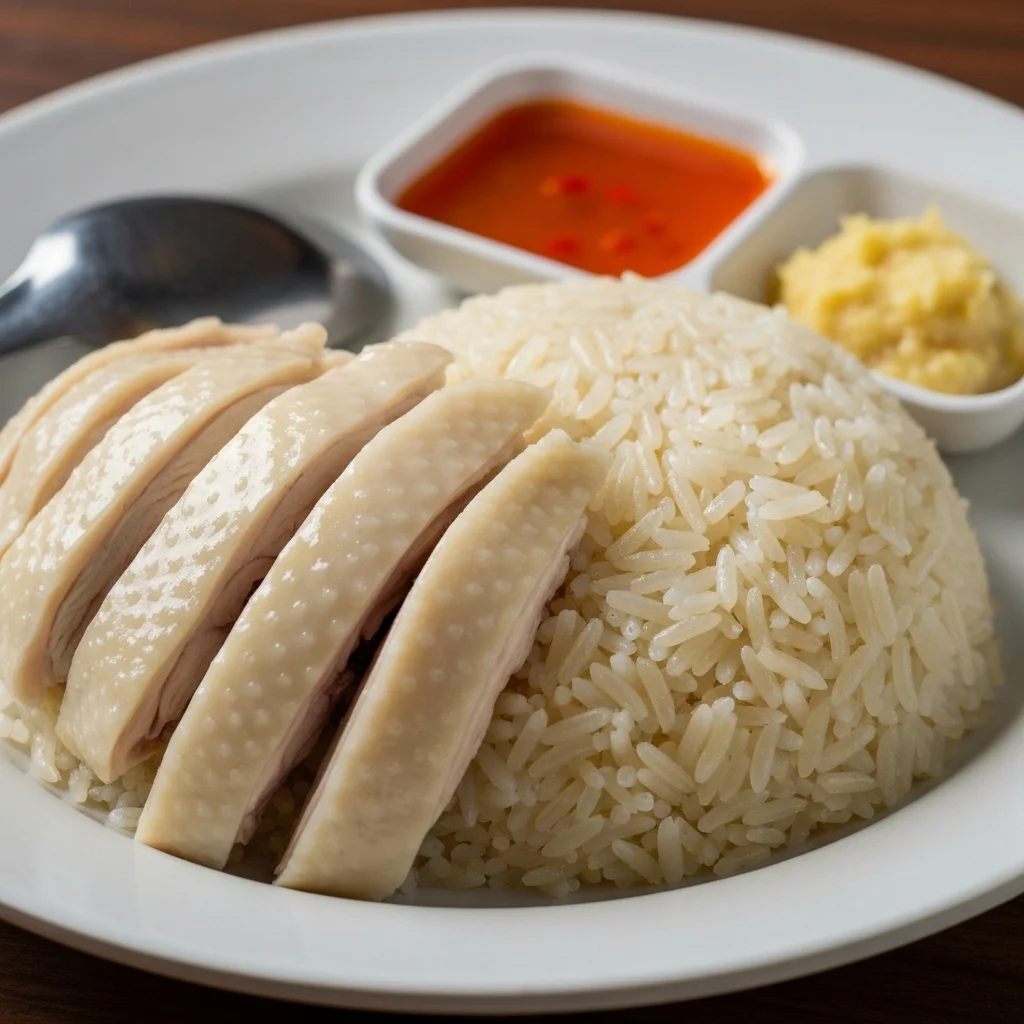
This is the default. When someone says "chicken rice" without specifying, they mean this. The chicken is poached whole in an aromatic stock with ginger, pandan, and sesame oil, then dunked in an ice bath. That ice bath creates the jelly layer between skin and meat that steamed chicken rice is known for. Thin, wobbly, translucent. It melts on your tongue.
The technique came from Wenchang, Hainan province. The original dish used tough free-range chickens slow-cooked until tender. Hainanese immigrants adapted it in Singapore during the early 1900s, swapping in softer birds and putting more emphasis on the rice. The Singaporean version is its own thing now.
How to tell it is good: The skin should be silky, almost slippery, with a visible jelly layer underneath. The meat should be moist without effort. If you need sauces to give the chicken flavour, the chicken was not good enough. Dry breast or stringy thigh means something went wrong.
Top Hainanese Steamed Stalls
#1 Margaret Drive Sin Kee Chicken Rice Chang Cheng Mee Wah Coffeeshop 87 #2 Ji De Lai Hainanese Chicken Rice Chong Pang Market & Food Centre 87 #3 Tian Tian Hainanese Chicken Rice Maxwell Food Centre 86 #4 Tiong Bahru Hainanese Boneless Chicken Rice Tiong Bahru Market 86 #5 Ming Kee Chicken Rice Kim San Leng Coffee Shop 86 #6 Ah Tai Hainanese Chicken Rice Maxwell Food Centre 85 #7 Zi Jin Cheng Hainanese Boneless Chicken Rice Alexandra Village Food Centre 85 #8 Boon Tong Kee 399 Balestier Road (flagship) 83 #11 Wee Nam Kee Chicken Rice United Square (Novena) 82Cantonese roasted
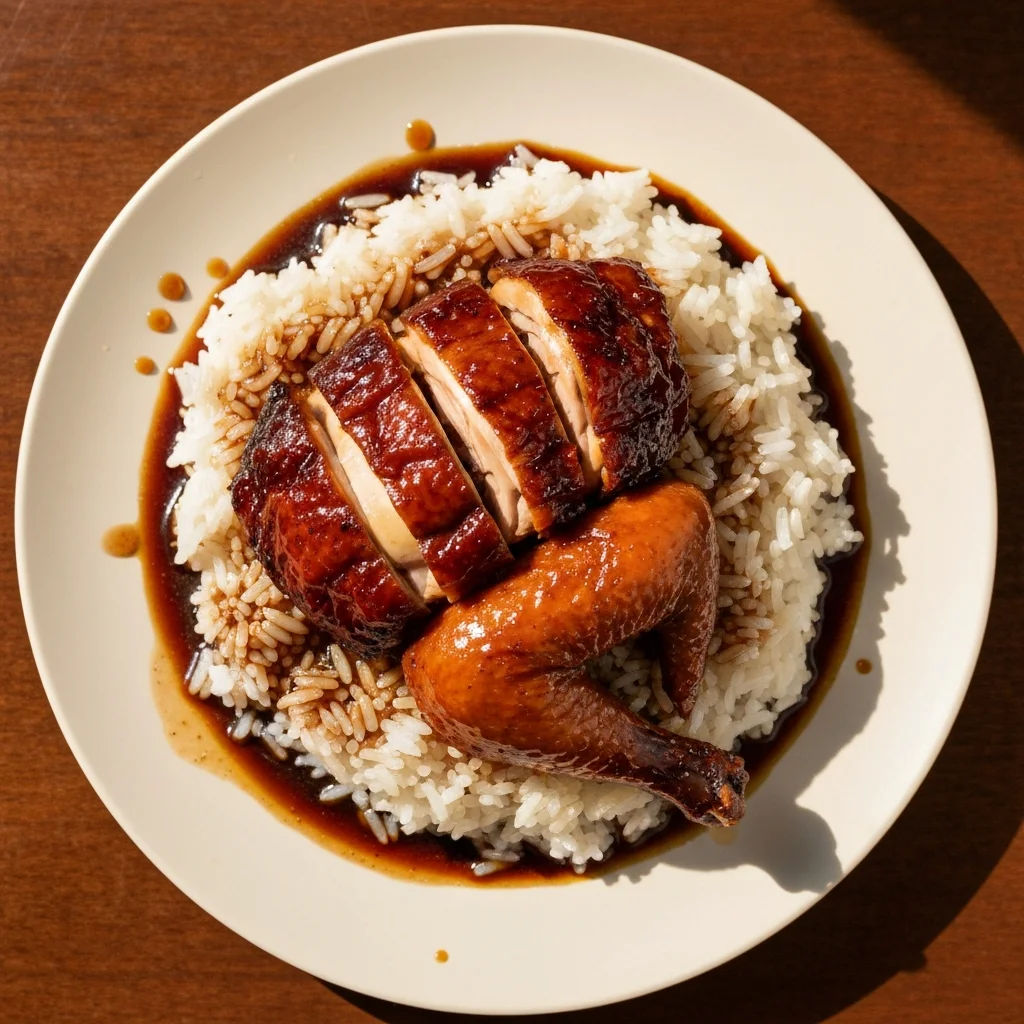
Steamed chicken is about restraint. Roasted chicken is not. The bird gets glazed with a soy sauce and honey mix, then roasted until the skin crisps and caramelises. Bolder, sweeter, with charred edges that add smoke.
It comes from the Cantonese char siu and siu mei tradition. The glaze does a lot of the work, which means it is more forgiving than steamed. A mediocre bird still tastes decent roasted. That is not a dig, just a different approach. Steamed chicken lets the bird do the talking. Roasted chicken adds a soundtrack.
How to tell it is good: Even, glossy glaze with no burnt patches. The skin should crackle when you bite through it. If the meat underneath is dry, the roasting went too long. You want a deep mahogany colour, not pale or patchy.
Top Cantonese Roasted Stalls
#9 Loy Kee Best Chicken Rice 342 Balestier Road 83Soy sauce chicken
This one is braised, not poached or roasted. The bird sits in a master stock made from dark soy sauce, star anise, cinnamon, cloves, and rock sugar. Some stalls say their master stock has been going for decades, topped up and adjusted daily. The chicken absorbs the sauce, so the meat comes out darker and sweeter than the other styles.
You probably know this style because of Hawker Chan, which got a Michelin star in 2016. First street food stall in the world to get one. The star got downgraded to a Bib Gourmand later, but the queue did not get shorter.
How to tell it is good: The sauce should taste layered, not just salty. Meat should be moist even though it looks dark. If the skin is falling apart, it was braised too long. With soy sauce chicken, the sauce is the star. The bird is more of a vehicle.
Top Soy Sauce Chicken Stalls
#10 Hawker Chan Soya Sauce Chicken Rice Chinatown Complex Food Centre 82Kampung (free-range)
Kampung chicken is free-range. The birds roamed and foraged, so the muscles are more developed. The meat is leaner, firmer, and tastes more like actual chicken. Factory birds cannot compete on flavour.
If you are used to the soft, gelatinous texture of steamed Hainanese chicken, kampung will feel tougher. That is the bird, not the cooking. Giving kampung chicken a bad review for being firm is like complaining that dark chocolate is bitter. You are describing what it is.
These chickens are harder to source now. Most come from Malaysian farms, and supply is limited. Stalls charge more for them, and they sell out early.
How to tell it is good: The flavour should be distinct, not bland or watery like mass-produced chicken often is. Firm but not chewy. Smaller portions at the same price are normal because the birds cost more to source.
Top Kampung Chicken Rice Stalls
#12 Five Star Kampung Chicken Rice 191 East Coast Road (flagship) 82Five dimensions, not one star rating
Stars flatten everything. A plate with mediocre rice and outstanding chilli gets 4.5 stars. A plate with perfect chicken and forgettable condiments also gets 4.5 stars. You cannot tell which is which.
We score chicken rice across five dimensions instead:
Aroma and flavour of the rice. Pandan leaf, chicken fat, garlic oil. Should smell before you taste.
Between silky and dry. The collagen 'jelly' layer under the skin is a sign of quality, not a defect.
Every stall's secret weapon. Ginger-forward vs lime-forward vs garlic-heavy. Balance of heat, acid, and flavour.
Dark soy sauce sweetness, ginger paste sharpness, and how they complement the chicken and rice together.
Amount of chicken relative to price, rice quantity, and overall value compared to hawker norms.
Chicken texture gets the most weight (25%) because a bad bird cannot be rescued by good rice. Rice fragrance is second (22%) because that is what separates hawker chicken rice from something you make at home. Chilli (20%) matters because it is the main thing that differentiates two stalls serving the same style. Portion value (18%) counts because hawker food is eaten regularly, not as a special occasion. Sauce balance (15%) rounds it out.
Why your Google review might be wrong
Google Maps is the most influential food rating system in Singapore. It is also frequently misleading. Not because people are dishonest, but because they rate food against the wrong criteria.
Four things we see constantly:
- "The chicken was bland." Steamed Hainanese chicken is supposed to be subtle. The flavour lives in the rice and the condiments. If you want bold, order roasted or soy sauce.
- "Too greasy." Chicken fat in the rice is what makes it chicken rice. Dry, light rice means the stall skimped on the fat. That oiliness is the point.
- "Tough chicken." If it is kampung free-range, yes, it is firmer. That is the bird, not a mistake. Firmness in a kampung chicken is texture. Firmness in a steamed chicken is a problem.
- "Not worth the queue." The queue tells you about demand. It tells you nothing about whether the rice will be good that day.
Sometimes the gap between a Google rating and a ShiokScore tells you more than either number. A stall sitting at 3.8 stars with a ShiokScore of 88 is probably a specialist being rated by people who wanted something different. A stall at 4.5 stars with a ShiokScore of 72 might be coasting on tourist traffic.
Frequently Asked Questions
Is the pink near the bone undercooked?
No. The pink colour comes from myoglobin released during the ice bath process used for Hainanese steamed chicken. If the meat pulls cleanly from the bone and juices are clear, the chicken is fully cooked. This is a sign of proper technique.
Should the rice be oily or dry?
Glistening, not dripping. Each grain should have a light sheen from the chicken fat or shallot oil it was cooked in. If the rice is bone-dry, the stall skipped the fat, which is the step that makes chicken rice chicken rice. But it should not be so greasy that oil pools on the plate.
Can you order half steamed, half roasted?
At many stalls that serve both styles, yes. This is a common order and a good way to compare techniques side by side. Some stalls charge a small premium for mixed plates.
Why do some stalls sell out by lunchtime?
Most hawker chicken rice stalls prepare a fixed number of birds each morning. They do not restock during the day. Once the chickens are sold, they close. This is especially true for stalls using kampung or specifically sourced birds with limited supply. Arriving before 11:30am is advisable for popular stalls.
What is the jelly layer under the skin?
Collagen. It solidifies during the ice bath and forms that wobbly layer between the skin and meat. It melts on your tongue. If your steamed chicken does not have it, the stall either skipped the ice bath or the chicken sat around too long after prep.
Hawker stall or restaurant: which is better?
Depends what you value. Hawker stalls often specialise in one dish and have been making it for decades. Restaurants are more comfortable and consistent but rarely hit the same peak. The Michelin Guide hands out Bib Gourmands to hawker stalls regularly, which says something about where the best food in Singapore actually is.
Ready to Eat?
See how 12 of Singapore's best chicken rice stalls score across all five dimensions.
View Rankings →