Laksa is a spicy coconut curry noodle soup. That one sentence covers about 10% of what you need to know, because there are at least four styles of laksa in Singapore and they share almost nothing besides the name.
Katong laksa and assam laksa are as different as tom yum and miso soup. One is rich, creamy, and coconut-heavy. The other is sour, fishy, and has no coconut at all. Rating them on the same scale makes no sense, and most online reviews do exactly that.
What makes laksa laksa
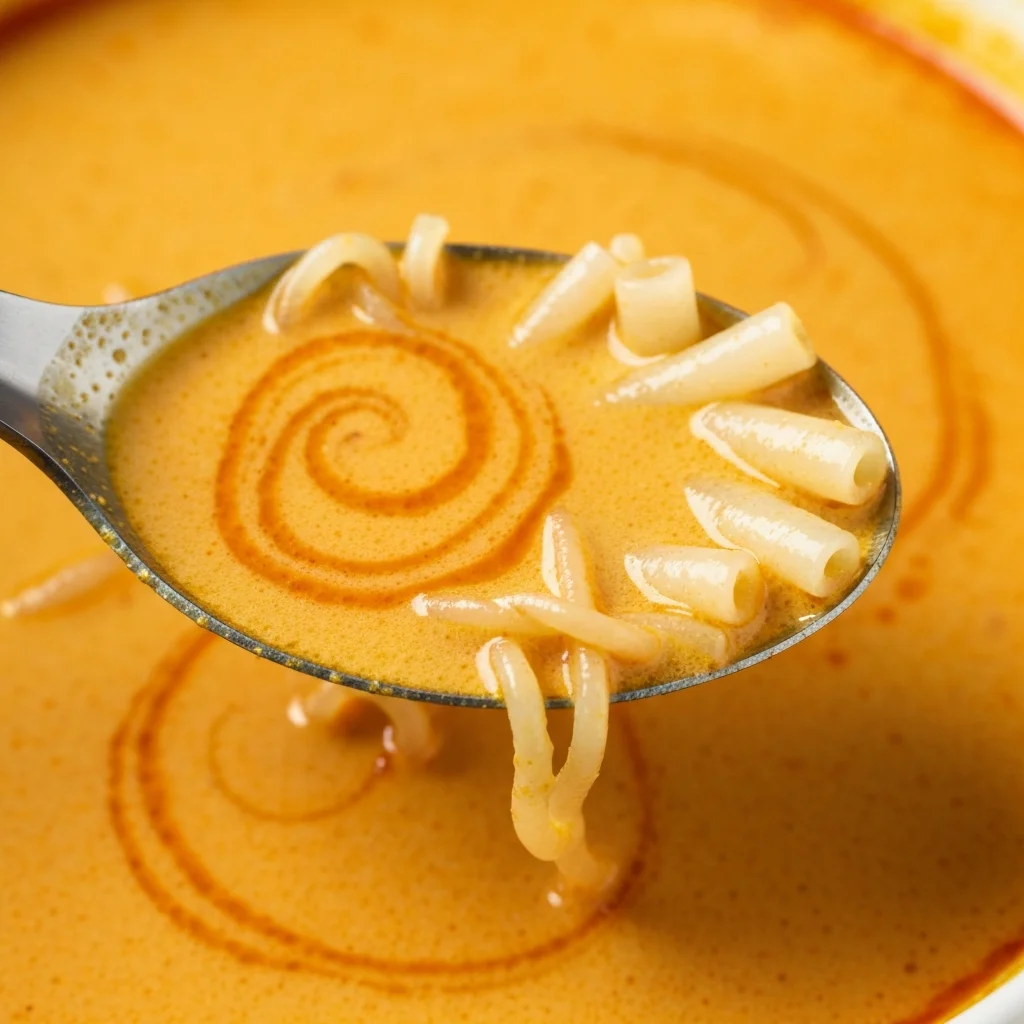
The rempah. This is the spice paste that defines every bowl. Dried shrimp, chillies, lemongrass, galangal, candlenut, shallots, belacan (fermented shrimp paste), and turmeric, pounded together and fried until fragrant. Every stall has its own ratio. The rempah is to laksa what the sambal is to nasi lemak: the thing that separates a memorable bowl from a forgettable one.
The broth. For curry laksa (the most common style in Singapore), the rempah is cooked in coconut milk and stock to create a rich, creamy, orange-hued soup. It should coat the back of a spoon. Too thin means the coconut was stretched. Too thick and heavy means the balance is off. Good laksa broth has spice, sweetness from the coconut, and a savoury depth from the dried shrimp in the rempah.
The noodles. Thick rice vermicelli (bee hoon) is standard. Some stalls offer yellow egg noodles or a mix. Katong-style stalls cut the vermicelli into short pieces so you eat the whole thing with a spoon. The noodles should be cooked through but not mushy. They absorb broth as they sit, so eating quickly matters.
The toppings. Cockles (blood cockles, specifically), prawns, fish cake slices, tau pok (fried tofu puffs that soak up broth), and beansprouts. Some stalls add hard-boiled egg or fried shallots. The cockles are polarising: they are raw or barely blanched, which some diners avoid. Ask for no cockles if that is not your thing.
The 4 styles of Singapore laksa
Katong / Nyonya laksa
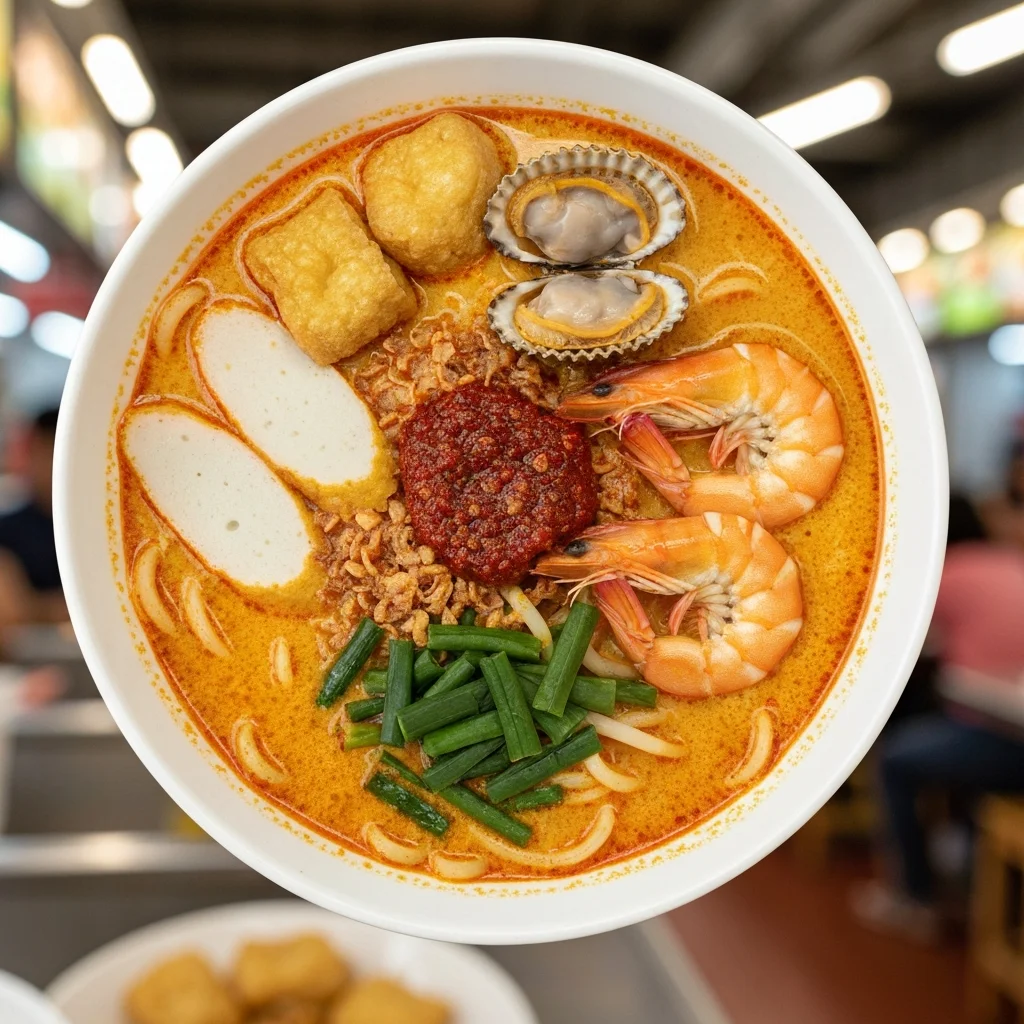
This is Singapore's signature laksa. The name comes from the Katong/Joo Chiat neighbourhood in the east, a Peranakan (Straits Chinese) enclave. The Peranakan community blended Malay and Chinese cooking, and laksa is one of the results.
The defining feature: noodles cut into short pieces so the whole bowl is eaten with a spoon. No chopsticks. This started at the original stalls in Katong and became the style's calling card. The broth is thick, rich, and orange from the rempah and coconut milk. Sambal is usually stirred in or dolloped on top for extra heat.
There are at least three stalls claiming to be the "original" Katong laksa (328, Janggut, and the one on East Coast Road). The rivalry has been going on for decades. All of them are good. The differences are in the broth thickness, the amount of cockles, and whether they add extra laksa leaf (daun kesum).
How to tell it is good: The broth should coat the spoon. Pick up a spoonful and tilt it: it should slide slowly, not run off like water. The prawns should be fresh (not rubbery). The cockles, if included, should not smell off. You should taste coconut, then chilli, then a lingering dried shrimp flavour. If all you taste is coconut and nothing else, the rempah was weak.
Top Katong / Nyonya Laksa Stalls
#1 Sungei Road Laksa Jin Shui Kopitiam 87 #4 Janggut Laksa Roxy Square 85 #5 328 Katong Laksa 51 East Coast Road 82Curry laksa
Same coconut curry broth family as Katong, but the noodles are not cut. You eat it with chopsticks and a soup spoon. The broth tends to be slightly lighter on coconut than Katong-style. More common in food courts and kopitiam across the island.
Some curry laksa stalls offer a choice of noodles: bee hoon (rice vermicelli), yellow noodles, or both. The "both" option is worth trying at least once. Yellow noodles add a chewier texture that contrasts with the soft vermicelli.
How to tell it is good: Same broth test as Katong. The main difference is the noodle experience. Because the noodles are not cut, you can slurp them. The broth should cling to the noodles as you lift them. Toppings matter more here because you eat them separately (with Katong, everything comes up in the spoon together).
Top Curry Laksa Stalls
#2 Depot Road Zhen Shan Mei Claypot Laksa Alexandra Village Food Centre 86 #3 928 Yishun Laksa Block 928 Yishun Central 86Assam laksa
This is a completely different dish that happens to share the name. No coconut milk. The broth is sour, made from tamarind (assam) and flaked mackerel fish. It originated in Penang and is common in Malaysia but rare in Singapore.
The toppings are different too: torch ginger flower (bunga kantan), mint leaves, pineapple, onion, and thick rice noodles. The overall flavour is tangy, fishy, and sharp. If you are expecting the creamy coconut richness of Katong laksa, you will be confused. They are not related.
How to tell it is good: The broth should be sour and complex, not just salty fish water. The tamarind should be front and centre. Torch ginger flower gives a distinctive floral note. If the broth tastes one-dimensional (just sour, or just fishy), the balance is off.
Sarawak laksa
Anthony Bourdain called this "the breakfast of the gods." It comes from Kuching in Malaysian Borneo. The broth uses sambal belacan as a base, with coconut milk and a different spice blend than the Nyonya version. Thinner and lighter than Katong laksa. The spicing is different, not simpler.
Toppings include prawns, shredded chicken, omelette strips, and bean sprouts over vermicelli. Very few stalls in Singapore serve authentic Sarawak laksa. If you find one, try it for the contrast alone.
How to tell it is good: The broth should be aromatic and lighter than Katong laksa, with a different spice profile. It should not taste like a watered-down version of curry laksa.
Five dimensions, not one star rating
A Google review that says "good laksa, 4 stars" could mean anything. Was the broth rich? Were the prawns fresh? Was the rempah complex or just hot?
We score laksa across five dimensions:
Coconut richness, spice depth, and lemak (fatty richness). A good laksa broth coats the spoon. Too thin means the rempah was stretched. Too thick and it becomes cloying.
Thick bee hoon, yellow noodles, or both. Katong-style cuts them into spoon-sized pieces. Texture should be springy, not mushy or clumped together.
Cockles, prawns, fish cake, tau pok (fried tofu puffs), beansprouts. Freshness matters. Rubbery prawns or limp beansprouts drag the whole bowl down.
The spice paste that defines the laksa. Dried shrimp, chilli, lemongrass, galangal, candlenut, belacan. Should taste layered and complex, not just hot.
Portion size, topping generosity, and price relative to hawker norms. A $5 bowl with three prawns and a thin broth is bad value no matter how it tastes.
Broth gets the most weight (30%). You taste it with every spoonful, and if the broth is bad, nothing saves the bowl. Rempah is second (25%) for a simple reason: that spice paste is the foundation everything else is built on. Toppings at 20% might surprise people, but prawns and cockles and fish cake are not interchangeable. Noodles (15%) affect the eating experience more than most people realise. Value (10%) rounds it out.
Why your Google review might be wrong
Four things we see in laksa reviews all the time:
- "Too rich." Laksa is coconut curry soup. It is supposed to be rich. If you want something lighter, order the clear soup noodles at the next stall. Richness is the point.
- "The cockles were weird." Blood cockles in laksa are raw or barely blanched. That is traditional. They add a briny, metallic contrast to the creamy broth. If raw shellfish is not your thing, ask for no cockles. Do not dock the stall for serving them the way they have been served for decades.
- "Too spicy." Laksa has chilli in the rempah. The sambal on top adds more. If you asked for less spicy and they did not adjust, that is fair feedback. If you ordered laksa and are surprised it is spicy, that is on you.
- "This is nothing like the laksa I had in Penang." Because it is not Penang laksa. Katong laksa and assam laksa are different dishes. Comparing them is like comparing ramen and pho because they are both noodle soups.
Frequently asked questions
What is the difference between laksa and curry?
Laksa uses a rempah (spice paste) as its foundation, with coconut milk added to the broth. The rempah typically includes dried shrimp, lemongrass, galangal, candlenut, and belacan. A curry uses curry powder or paste as its base. The flavour profiles overlap, but laksa uses a Southeast Asian spice blend that is different from Indian or Thai curries.
Why is Katong laksa eaten with a spoon?
The noodles are cut into short pieces so the entire bowl can be eaten with just a spoon. No chopsticks needed. This started at the original Katong laksa stalls and became the defining characteristic of the style. It means you get noodles and broth in every spoonful.
Is assam laksa the same as curry laksa?
They are completely different. Curry laksa (including Katong laksa) has a rich, coconut milk-based broth. Assam laksa has a sour, tamarind and fish-based broth with no coconut milk at all. Assam laksa originated in Penang and is tangy and fishy. Most laksa in Singapore is curry-style.
What noodles are used in laksa?
Most Singapore laksa uses thick rice vermicelli (bee hoon). Some stalls offer yellow egg noodles or a mix of both. Katong-style stalls cut the vermicelli into short pieces. Yellow noodles add a chewier texture that contrasts with the soft vermicelli.
Is laksa spicy?
Curry laksa has a moderate to high spice level depending on the stall. The heat comes from dried chillies in the rempah and sambal that some stalls add on top. Most stalls can adjust spice levels if you ask. Assam laksa is sour rather than spicy, though it still has some chilli.
Why do some stalls sell out early?
Popular laksa stalls cook their rempah and broth in fixed batches each morning. Once the day's supply runs out, they close. Some of the oldest stalls are also run by one or two people, so production is limited. Arriving before noon is a safer bet at the famous ones.
Ready to Eat?
See how Singapore's best laksa stalls score across all five dimensions.
View Rankings →